
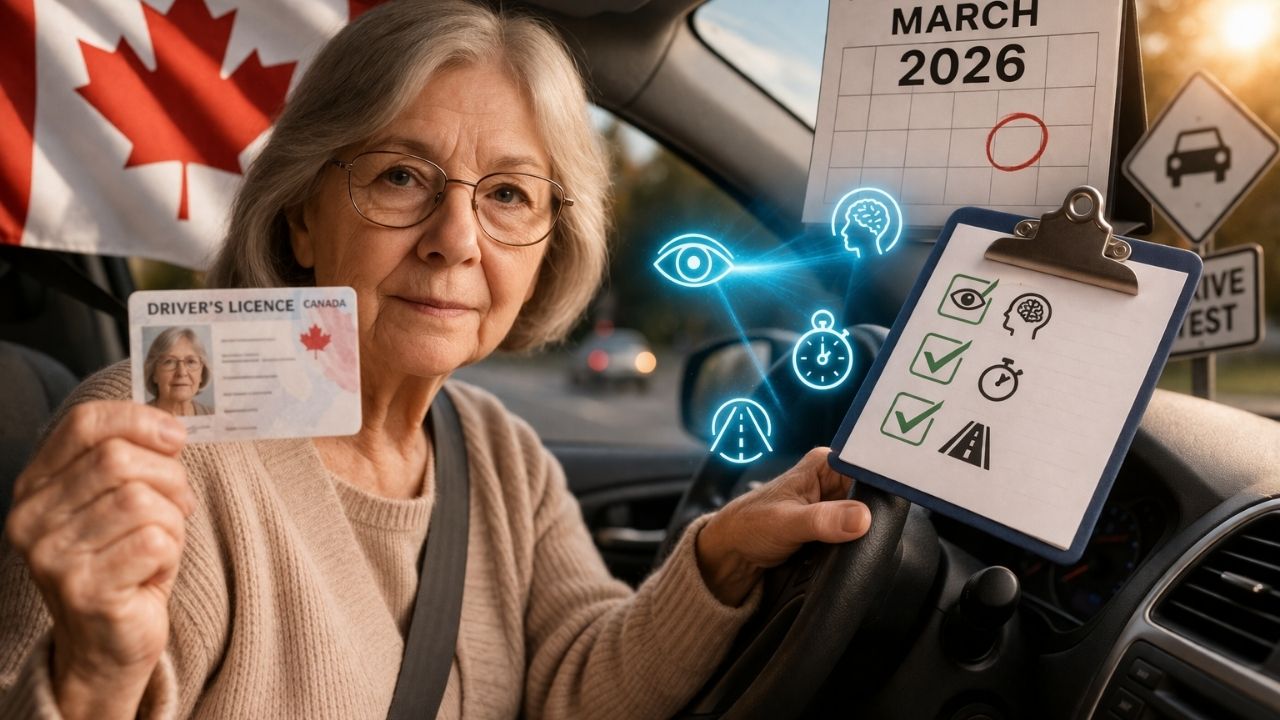
A major shift is coming for senior drivers across Canada, and it could affect how millions keep their licences. Starting March 2026, renewing a driver’s licence won’t be as simple as before—new checks are being introduced that focus on real driving ability, not just age.
For many older Canadians who rely on driving for independence, this change raises important questions. What tests will be required? Who needs to take them? And how serious are these new rules? Here’s what you need to know right now.
Why Canada Is Tightening Rules for Older Drivers
Canada’s population is aging, and more seniors are staying active and driving longer than ever before. While that’s a positive sign of improved health and longevity, it also brings new safety challenges on increasingly complex roads.

Authorities are responding to concerns around slower reaction times, changes in vision, and cognitive decline that can affect driving. At the same time, traffic conditions have become more demanding, with faster speeds and advanced vehicle technologies.
Instead of relying only on age limits, the new approach focuses on whether a person is actually fit to drive. The goal is to keep capable seniors on the road while identifying risks early.
What Will Change Starting March 2026
Beginning in March 2026, licence renewals for seniors will involve more structured evaluations. These go beyond the basic checks used in the past and are designed to reflect real-world driving conditions.

Drivers may face enhanced vision testing, including checks for peripheral awareness and low-light visibility. Cognitive screenings could also be introduced to assess memory, attention, and decision-making skills.
In some cases, reaction time tests and short knowledge refreshers on traffic rules may be required. For older age groups or specific concerns, on-road driving tests could also become part of the process.
Who Will Be Affected by the New Rules
Not all seniors will face the same requirements. The system is expected to follow a tiered structure based on age and individual circumstances.

Drivers aged 65 to 69 may see little to no change, although awareness programs could be encouraged. Those between 70 and 79 are more likely to undergo moderate checks, such as vision and cognitive tests.
For drivers aged 80 and above, stricter evaluations and more frequent renewals are expected. This could include on-road assessments depending on individual cases.
While details may vary slightly across provinces, the overall direction is clear: more structured and consistent testing for older drivers.

Licence Renewals Will Happen More Often
Another key change is how frequently seniors will need to renew their licences.
Instead of the standard five-year cycle, drivers over 70 may need to renew every two years. In some regions, drivers over 80 could be required to renew annually.
This shorter cycle allows authorities to monitor changes in driving ability more closely and respond quickly if concerns arise.

What Happens If You Don’t Pass a Test
Failing a test doesn’t automatically mean losing your licence for good. The system is designed to be supportive rather than punitive.
Drivers may be given options such as retaking the test after some time, completing a driver improvement course, or receiving a restricted licence—such as driving only during daylight hours.
In some cases, a medical reassessment may be requested to better understand the situation. The focus remains on safety while helping seniors maintain independence where possible.

How This Connects to Senior Benefits and Payments
Many seniors are also concerned about how these changes might affect their finances. The good news is that licence renewal rules are completely separate from government benefit programs.
Monthly pensions, income supplements, and other support payments will continue as usual, regardless of whether a licence is renewed or restricted.
So while driving rules are evolving, financial support systems remain stable and unchanged.
How Seniors Can Prepare Right Now
Preparation can make a big difference when it comes to passing new assessments.
Scheduling regular eye exams is one of the most important steps, as vision plays a key role in safe driving. Staying mentally active through reading, puzzles, or learning new skills can also help maintain cognitive sharpness.
It’s also a good idea to review current traffic rules and practice driving in different conditions. Some seniors may benefit from refresher driving courses designed specifically for older drivers.
Taking these steps early can help reduce stress and improve confidence ahead of renewal.
Common Concerns — Answered Clearly
Many seniors are worried about what these changes really mean.
Not everyone will lose their licence. Most drivers who are fit and safe will continue driving without major issues. The tests themselves are not meant to be overly difficult—they are designed to assess basic abilities.
If someone doesn’t pass on the first try, there are usually opportunities to retake tests or meet additional requirements. And while the framework is national in direction, exact rules may differ slightly depending on the province.
Why These Changes Matter in the Long Run
This update reflects a broader shift in how driving safety is approached in Canada. Instead of focusing only on age, the system now emphasizes ability, awareness, and real-world performance.
By introducing structured assessments, authorities aim to reduce accidents, improve road safety, and support seniors in staying mobile for as long as possible. It’s a more balanced approach—protecting both individual independence and public safety.
Starting March 2026, Canada’s new licence renewal rules for seniors will bring more testing, more frequent renewals, and a stronger focus on real driving ability.
While the changes may feel uncertain at first, they are designed to support safe driving—not take it away. With the right preparation and awareness, most seniors can continue driving confidently.
At the same time, financial benefits and support payments remain unchanged, offering stability as these new rules roll out.